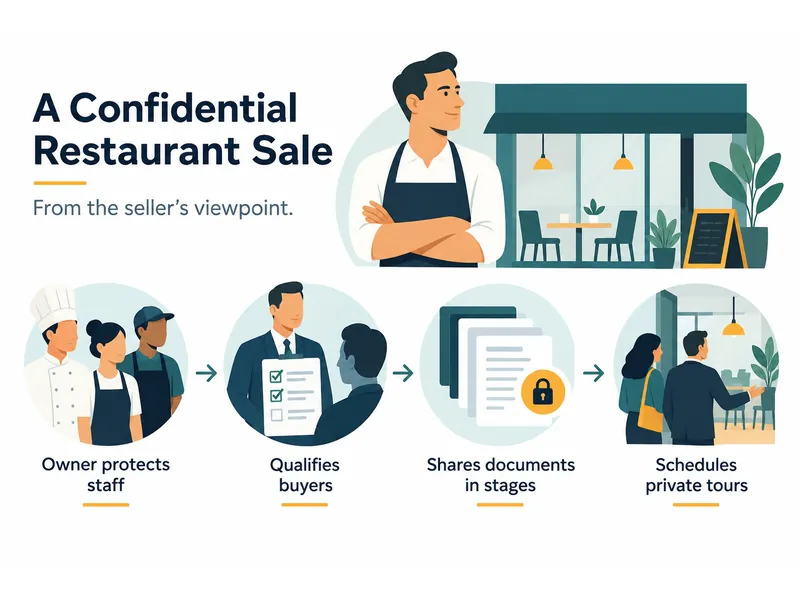
A confidential restaurant sale can let an owner explore a transition while the business continues operating. Start with a clear sale objective, advisers and a list of approved information. Review how restaurant listings present opportunities, then decide what details should remain private at each stage.
Control who receives information
Work with a lawyer or broker on buyer screening, the confidentiality agreement, permitted disclosures and secure document access. Decide how to answer inquiries without revealing the restaurant’s identity prematurely. Keep staff, customers, suppliers and landlord relationships in mind when planning private viewings.
Prepare a consistent information package
Organize financial statements, lease, permits, equipment and operating details. Confirm which assets or shares may be sold and what requires third-party consent. Correct inconsistencies and separate documents appropriate for an initial overview from those shared after buyer qualification.
Move from interest to due diligence
Track who received what, when, and under which agreement. Have advisers review offers, conditions and the purchase agreement. A buyer will independently check the business; our restaurant purchase guide describes common review areas. Confidentiality protects information, but it does not guarantee a sale.