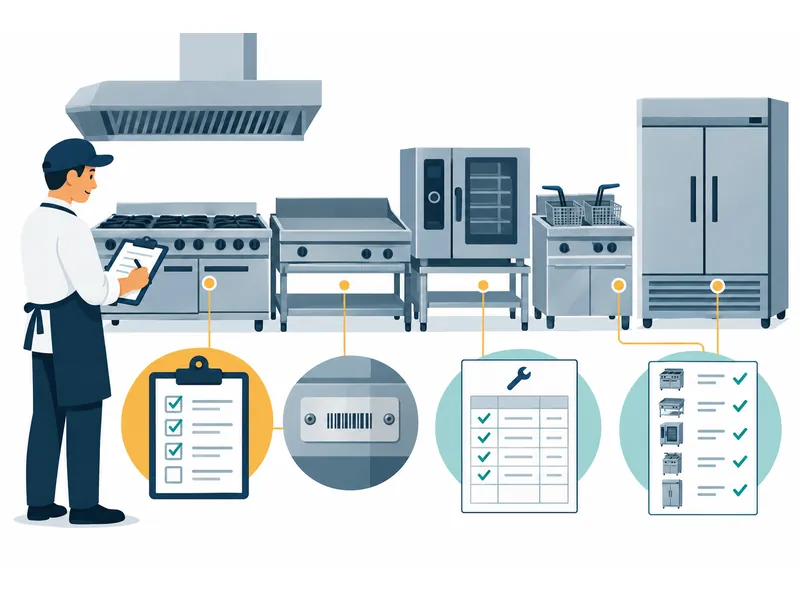
Restaurant equipment due diligence checks whether the fixtures and equipment described in a sale are present, owned by the seller and fit for continued use. Compare the listing with an itemized restaurant for sale inventory before estimating value.
Build an item-by-item schedule
Record each major appliance, serial or model number, approximate age, location and stated condition. Ask for purchase, lease, maintenance and repair records. Confirm whether equipment is owned outright, financed or leased; inclusion in a listing does not prove transferability. Match the schedule to a physical walk-through and note missing, inaccessible or out-of-service items.
Inspect systems and estimate costs
Have qualified technicians assess refrigeration, cooking equipment, ventilation, fire suppression and other critical systems. Request recent service history and compare repair estimates with the seller’s description. Check whether upgrades or replacements may be required by the landlord, insurer or authority. Inventory, furniture and fixtures should be documented separately from equipment where the transaction requires it.
Use verified condition in the deal
Discuss discrepancies, warranties, removal rights and closing-day condition with your advisers. Do not treat a seller’s estimate or a generic replacement price as an independent valuation. Add confirmed items and unresolved questions to your diligence file. For the broader purchase review, see our restaurant buying guide.