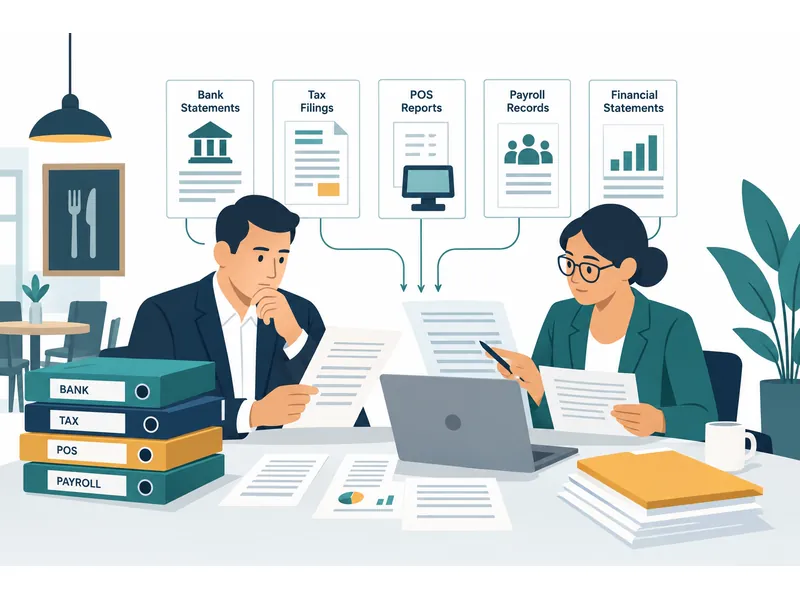
Before buying a restaurant, make a dated request list so the financial review uses complete and comparable records. For a restaurant listing, ask for source documents rather than relying only on a spreadsheet or a verbal earnings summary.
Request records by period
Ask for financial statements, business tax filings, sales-tax returns, point-of-sale reports, bank statements, payroll summaries, supplier invoices and inventory counts for several comparable periods. Include rent, utilities, insurance, repairs, loans, equipment financing, gift cards and customer deposits. Confirm whether records cover the same business entity and location.
Track gaps and reconcile figures
Use a simple log with request date, period covered, source, received status and follow-up question. Compare sales reports with deposits and tax returns; match major costs to invoices and payroll. Flag missing months, changed accounting methods, related-party expenses and unusual adjustments for an accountant.
Use the documents in context
Financial records do not explain the whole operation: connect them to lease obligations, equipment condition, staffing and seasonality. Keep estimates separate from verified amounts and protect sensitive information. Our buying guide explains how this document collection fits into diligence.
Ask an accountant to interpret records for your transaction.