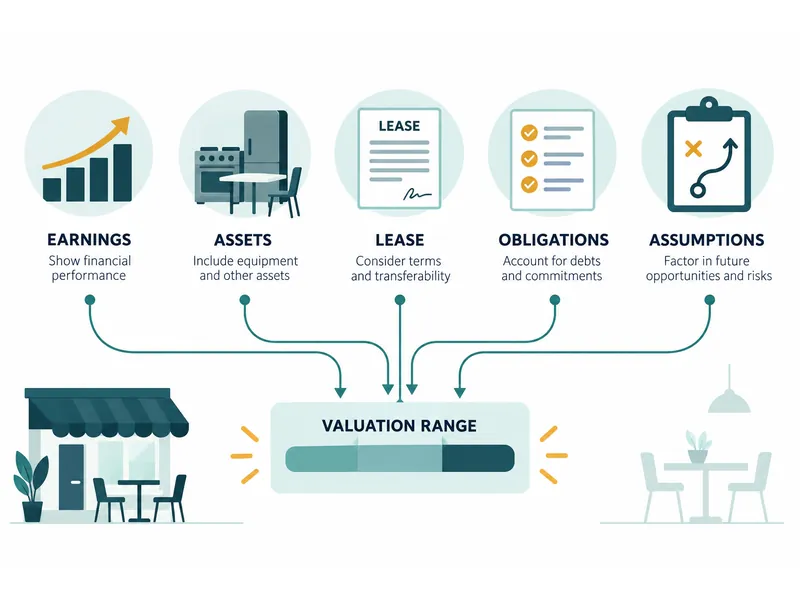
Before setting an asking price, a seller should understand what a restaurant valuation includes and which evidence supports it. Review restaurant listings to see how opportunities are presented, but do not treat another asking price as a comparable valuation without analysis.
Prepare clean operating and asset records
Gather financial statements, tax records, sales support, payroll, equipment schedules, inventory, debt and lease documents. Separate personal or one-time expenses only when they can be verified and explained. Record deferred maintenance, required capital spending and obligations that may affect a buyer’s view.
Choose a method that fits the evidence
An adviser may assess maintainable earnings, tangible assets or relevant completed transactions, depending on the business and available information. Each method depends on assumptions about normalized earnings, location, lease term, owner involvement, risk and transferability. A multiple is a tool, not a fixed rule.
Explain the conclusion transparently
Keep a record of sources, adjustments, excluded items and uncertainty. Distinguish a professional valuation from an asking price or negotiation target. Ask a qualified valuator, accountant and lawyer to address their fields. Our buyer’s guide explains the checks a purchaser may use to test the price.
This article is general information, not a formal appraisal or financial advice.